CRISPR-CAS9 APPLICATIONS IN TREATING MONOGENIC DISORDERS: PROMISE AND PERILS
DOI:
https://doi.org/10.71465/jhmri33Keywords:
CRISPR-Cas9, Monogenic Disorders, Gene Editing, Genetic TherapyAbstract
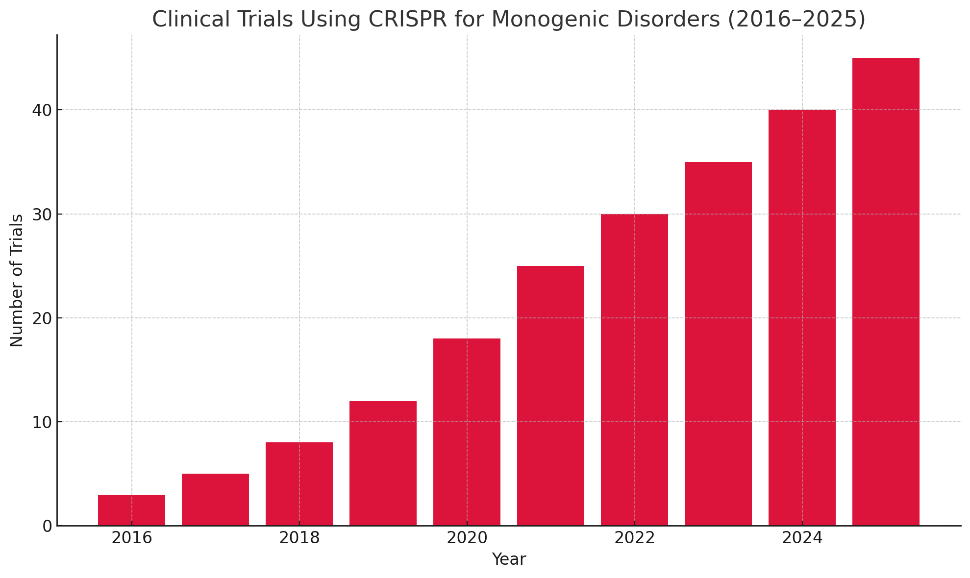
CRISPR-Cas9 technology has emerged as a revolutionary gene-editing platform with vast implications in precision medicine. This review examines its application in treating monogenic disorders such as cystic fibrosis, sickle cell anemia, and Duchenne muscular dystrophy. The paper explores the underlying mechanism of CRISPR-Cas9, recent breakthroughs in clinical trials, delivery systems, and ethical issues associated with germline editing. While significant therapeutic success has been documented, technical challenges like off-target effects and immunogenic responses warrant cautious advancement. This paper provides a comprehensive overview of both the potential and limitations of CRISPR-Cas9 for curing monogenic diseases.
Downloads
Published
Issue
Section
License

This work is licensed under a Creative Commons Attribution-NonCommercial-NoDerivatives 4.0 International License.
All articles published in the Journal of Health, Medical Research and Innovations are distributed under an open access license. Authors retain copyright and grant the journal the right of first publication. The published content can be freely accessed, shared, and reused for non-commercial purposes, provided proper citation is maintained and the original work is not altered.