THE IMPACT OF GENOMIC SEQUENCING ON EARLY DIAGNOSIS OF RARE DISEASES
DOI:
https://doi.org/10.71465/jhmri62Keywords:
genomic sequencing, rare diseases, early diagnosis, , whole-exome sequencing, whole-genome sequencing, diagnostic yieldAbstract
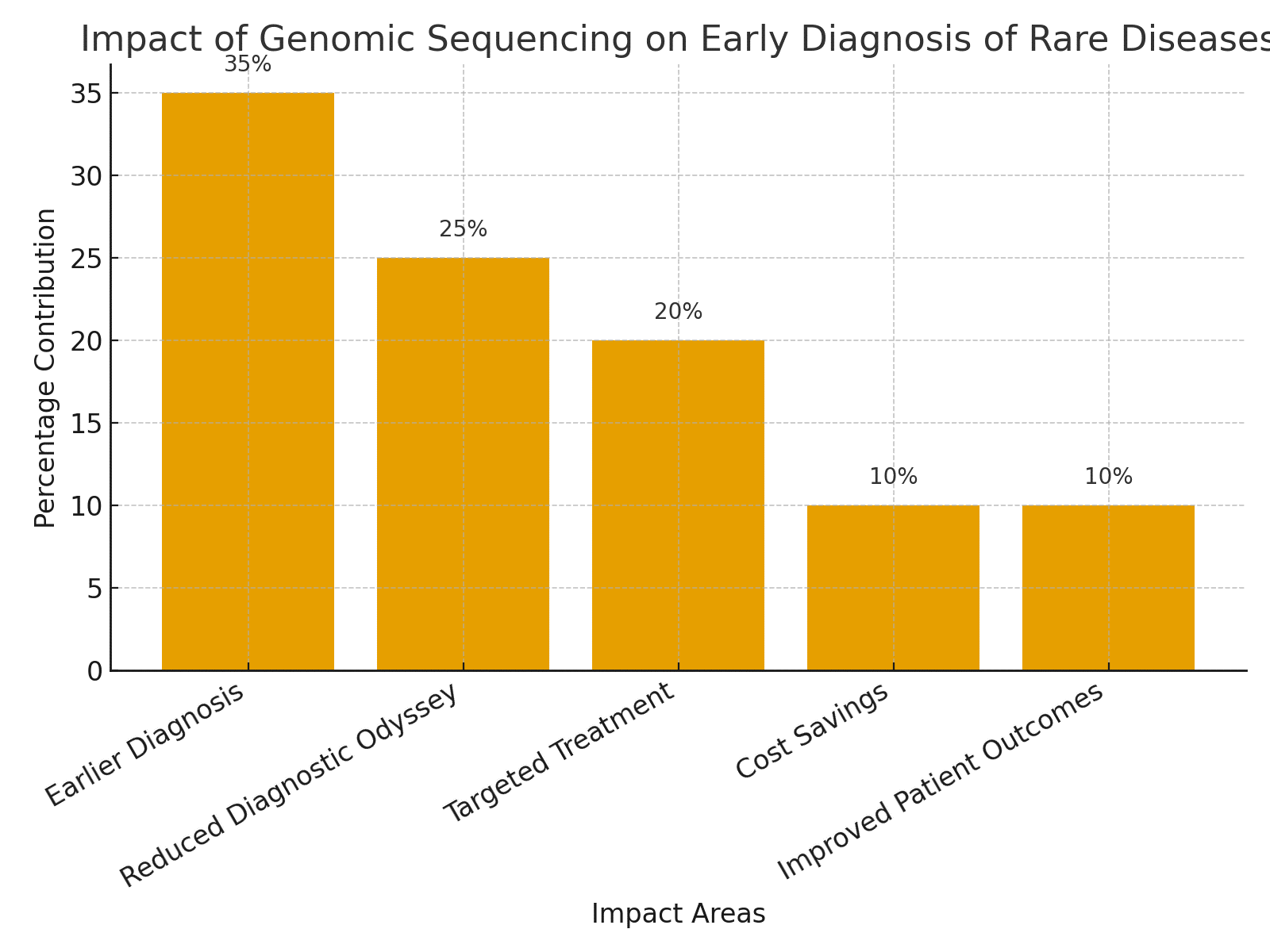
Genomic sequencing, encompassing whole-exome sequencing (WES) and whole-genome sequencing (WGS), has revolutionized the early diagnosis of rare diseases by significantly reducing diagnostic delays and enhancing diagnostic yield. This article reviews recent advancements in genomic technologies, their clinical adoption, and their impact on patient outcomes. Notable diagnostic yields have reached 25–50% in pediatric cohorts, with early implementation in neonatal and critical care settings yielding substantial reductions in morbidity and healthcare costs. We outline current challenges—including accessibility, cost, and ethical considerations—and present future directions for integrating genomic strategies into healthcare systems worldwide. We conclude with recommendations to optimize early diagnosis pathways through genomic sequencing integration.
Downloads
Published
Issue
Section
License
Copyright (c) 2023 Dr. Aisha Khan, Prof. Imran Raza, Dr. Emily Wigby, Dr. Gabriel Schobers (Author)

This work is licensed under a Creative Commons Attribution-NonCommercial-NoDerivatives 4.0 International License.
All articles published in the Journal of Health, Medical Research and Innovations are distributed under an open access license. Authors retain copyright and grant the journal the right of first publication. The published content can be freely accessed, shared, and reused for non-commercial purposes, provided proper citation is maintained and the original work is not altered.