DIGITAL HEALTH LITERACY AND ITS IMPACT ON HEALTH OUTCOMES IN LOW-INCOME COMMUNITIES
DOI:
https://doi.org/10.71465/jhmri38Keywords:
Digital Health Literacy, Health Outcomes, Low-Income Communities, Health EquityAbstract
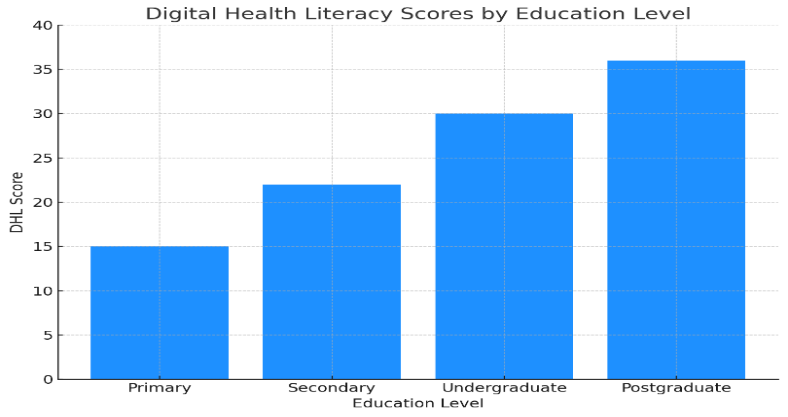
Digital health literacy (DHL) — the ability to seek, understand, and use digital health information — is increasingly critical for improving health outcomes. However, disparities in DHL in low-income communities limit the effective utilization of digital health resources, exacerbating health inequities. This study evaluates the current state of digital health literacy in selected low-income Pakistani communities and its impact on health behaviors and outcomes. Using mixed methods, data were collected through surveys and focus group discussions. Findings indicate low DHL levels, poor access to reliable digital resources, and mistrust in digital platforms. Enhanced DHL was significantly associated with improved health-seeking behaviors and self-management of chronic conditions. Policy implications include the need for targeted educational programs and infrastructural investments to bridge the DHL gap in vulnerable populations.
Downloads
Published
Issue
Section
License

This work is licensed under a Creative Commons Attribution-NonCommercial-NoDerivatives 4.0 International License.
All articles published in the Journal of Health, Medical Research and Innovations are distributed under an open access license. Authors retain copyright and grant the journal the right of first publication. The published content can be freely accessed, shared, and reused for non-commercial purposes, provided proper citation is maintained and the original work is not altered.